
Modern agrotechnologies: how equipment increases yields and reduces costs
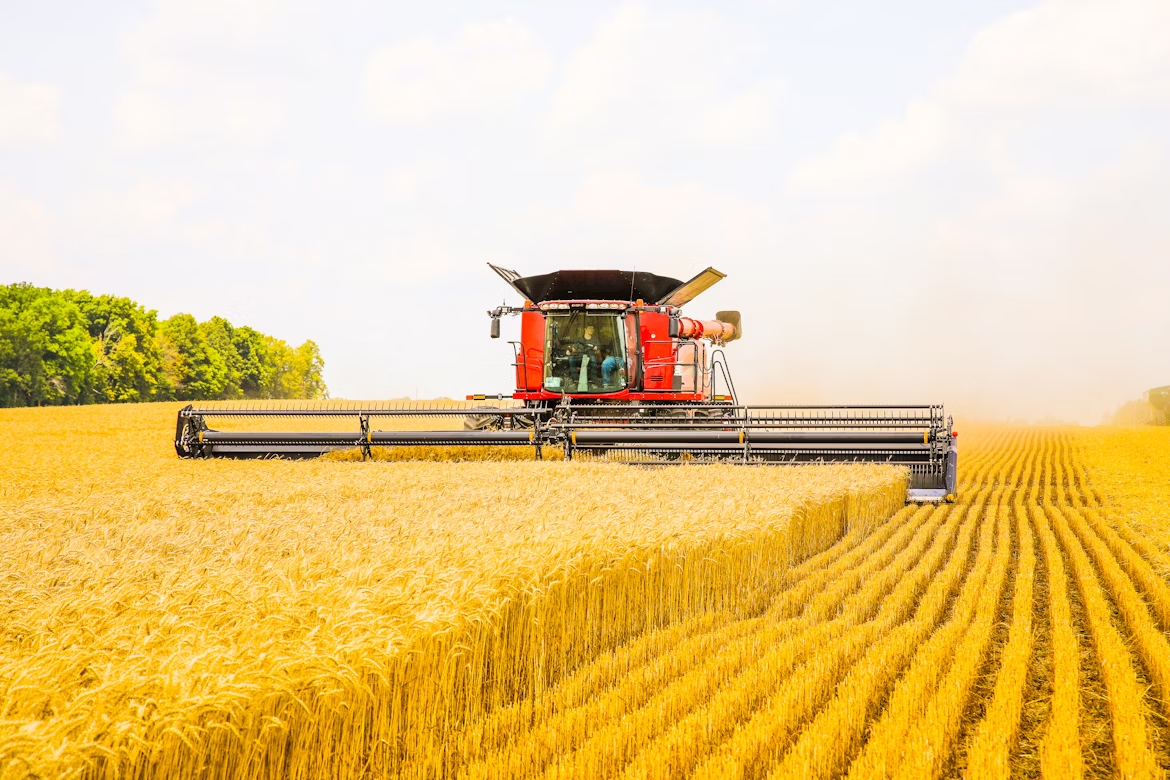
Modern agrotechnologies: how equipment increases yields and reduces costs
The agricultural sector is undergoing a profound transformation, with technology playing a central role in shaping its future. Modern equipment and digital tools are enabling farmers to produce more with fewer resources, optimize operations, and reduce risks associated with climate variability and labor shortages. In 2025, agrotechnologies are no longer seen as optional innovations but as vital components of a sustainable and profitable farming model. Companies that adopt these solutions early are gaining a significant advantage, while those that delay risk losing competitiveness in an increasingly globalized food system.
Automation and Precision Farming
Automation and precision farming technologies are revolutionizing agricultural practices by enhancing accuracy and reducing waste. Instead of treating entire fields as uniform plots, farmers can now analyze and manage them on a micro level, responding to the unique conditions of specific areas. This not only boosts productivity but also reduces input costs, as resources such as fertilizers, seeds, and water are applied exactly where they are needed. By minimizing inefficiencies, automation improves both profitability and sustainability.
Sensors and Satellite Monitoring
Sensors and satellite monitoring systems have become indispensable tools for modern agriculture. They provide real-time data on soil health, moisture levels, nutrient availability, and crop growth. Farmers can use this data to make informed decisions about irrigation, fertilization, and pest control, significantly reducing guesswork. For example, moisture sensors prevent overwatering, which conserves water and prevents soil degradation. Similarly, nutrient sensors help optimize fertilization schedules, ensuring plants receive the exact nutrients they require. Over time, these technologies lead to healthier crops, higher yields, and lower operating costs.
Drones and Agricultural Robots
Drones and agricultural robots are expanding the possibilities of field management. Drones equipped with multispectral cameras can detect early signs of crop stress that are invisible to the human eye, allowing farmers to intervene before problems escalate. They are also used for crop spraying, enabling precise application of fertilizers or pesticides and reducing chemical waste. Meanwhile, robots perform labor-intensive tasks such as planting, weeding, and harvesting. By replacing manual labor, these machines address labor shortages, lower payroll expenses, and increase efficiency. Their precision also minimizes crop damage and ensures uniform quality across harvests.
Efficient Use of Resources
Resource management has always been a critical challenge in agriculture, and modern equipment is helping to address it. Rising costs of water, fertilizers, and energy make efficiency more important than ever. Farmers are turning to agrotechnologies that maximize the return on each input while reducing environmental impact. By leveraging data and advanced machinery, farms are becoming more resilient to fluctuations in resource availability and market prices.
Smart Irrigation Systems
Smart irrigation systems are redefining how water is used in agriculture. Traditional irrigation often results in significant waste, with water being applied uniformly regardless of crop needs or soil conditions. Smart systems, however, use data from sensors and weather forecasts to deliver water precisely where and when it is required. This reduces water consumption, lowers energy costs for pumping, and prevents overwatering, which can lead to root disease. In water-scarce regions, these technologies are not just cost-saving but essential for the survival of farming communities.
Energy-Efficient Machinery
Energy-efficient machinery represents another major breakthrough in agricultural sustainability. Modern tractors, combines, and generators are designed to consume less fuel while delivering higher performance. Many are equipped with hybrid or electric power systems, reducing reliance on fossil fuels. These machines also feature advanced telemetry, enabling operators to monitor fuel consumption and optimize performance in real time. The result is a significant reduction in energy costs and greenhouse gas emissions. For farms operating at scale, even small improvements in efficiency can translate into substantial financial savings.
Improving Yields
Yield improvement is at the heart of agrotechnology adoption. By combining advanced equipment with scientific approaches to crop management, farmers can produce more food from the same amount of land. This is critical in a world where demand for food continues to grow, while arable land is limited and threatened by urbanization and climate change. Modern technologies are ensuring that each hectare produces its maximum potential.
Seed Improvement and Breeding
Seed technologies have advanced dramatically in recent years, and when paired with modern equipment, they create a powerful formula for productivity. Breeding programs focus on developing seeds that are more resistant to drought, pests, and diseases. Mechanized planting equipment ensures precise seed placement, giving crops the best chance to thrive. Farmers can combine these seeds with data-driven cultivation practices, such as monitoring germination rates and adjusting inputs accordingly. The end result is a more resilient and productive harvest, even in challenging conditions.
Soil Management Technologies
Soil health is the foundation of successful agriculture, and modern equipment is enhancing how it is managed. Advanced cultivators, planters, and seed drills ensure even soil preparation and accurate seed distribution. Techniques like reduced tillage and precision fertilization help preserve soil structure and prevent erosion. Some systems even integrate soil sensors with planting machinery, adjusting depth and spacing in real time. These innovations ensure that crops grow in optimal conditions, improving both yield quantity and quality.
Economic Impact
While adopting modern equipment requires substantial investment, the long-term economic benefits are clear. Farmers who embrace agrotechnologies often see reductions in operating costs, higher profitability, and improved competitiveness in the marketplace. The economics of agriculture are increasingly favoring innovation, with returns on investment becoming more tangible each season.
Reduced Labor Costs
Mechanization is addressing one of the most pressing challenges in agriculture: labor shortages. Hiring and retaining workers for planting, harvesting, and other physically demanding tasks has become increasingly difficult and expensive. Robots and autonomous machinery reduce dependency on seasonal labor, lowering payroll expenses and ensuring that work is completed on time. For farms operating in regions with limited access to labor, mechanization is often the only way to remain profitable.
Optimized Logistics and Post-Harvest Management
Beyond production, agrotechnologies are transforming the logistics of agriculture. Automated storage systems monitor temperature and humidity, reducing spoilage and post-harvest losses. Sorting and grading machines ensure that only products meeting quality standards reach the market, increasing revenues and reducing waste. Logistics platforms powered by artificial intelligence help optimize transportation routes, cutting fuel costs and speeding up delivery times. These improvements create a more efficient farm-to-market chain, enhancing profitability across the supply chain.
Conclusion
Modern agrotechnologies are no longer optional tools but essential components of a competitive agricultural strategy. They help farmers produce more food with fewer resources, adapt to environmental challenges, and secure financial sustainability. By investing in advanced equipment, farms can reduce costs, increase yields, and position themselves as leaders in the global market. For companies and agricultural enterprises, adopting these technologies is not merely a trend but a necessity for long-term growth and resilience.

Share your opinion
We’d love to hear your opinion on the topic. Your comment helps other readers and gives us valuable feedback to improve our content. Feel free to ask questions, share your ideas, or tell us about your experience — we’re always open to conversation!